I often share things in my Instagram stories about the things we are doing day to day, and I often share snaps of the maths that the older two are doing. The last couple of weeks I have been asked for recommendations for maths curriculums, so I thought it was worth writing again, perhaps in more detail, about the things we use.
For us, having a good grounding in maths is really important. We have therefore made sure that we factor maths work into the everyday activities for the older two from when they would have started their reception year. Some people think this is too young to start maths in a formal way, but it works for us.
The basis of our maths work is Maths No Problem. This was something that a friend had started using so she brought the books for me to take a look at before I jumped into buying them.

Why Maths No Problem?
As I said above, having a good grounding in maths is really important for us, and whilst I am confident in primary school age maths, I wasn’t sure what was the best order for teaching it. The Maths no Problem books have two books per year and take you through the subject in a logical way. It’s used in many schools, so I am confident that the children are working at a level comparative to their schooled friends and working at a level expected, should they ever enter the school system.
How Maths No Problem is Set out.
There are two textbooks and two workbooks per year. The textbooks cost £9.99 and the workbooks are £8.49 each. We have one textbook and then a workbook for both Daniel and Emma (and in turn Harry once he is a little older). At the moment Daniel is working through year 2, and Emma year 1.
The textbooks are split into short lessons and the pages are printed in colour. They’re appealing and they set out some problems, work the reader through how to solve the problem and offers different activities to consolidate the lesson. You’re then directed to pages in the workbook that offer practice.
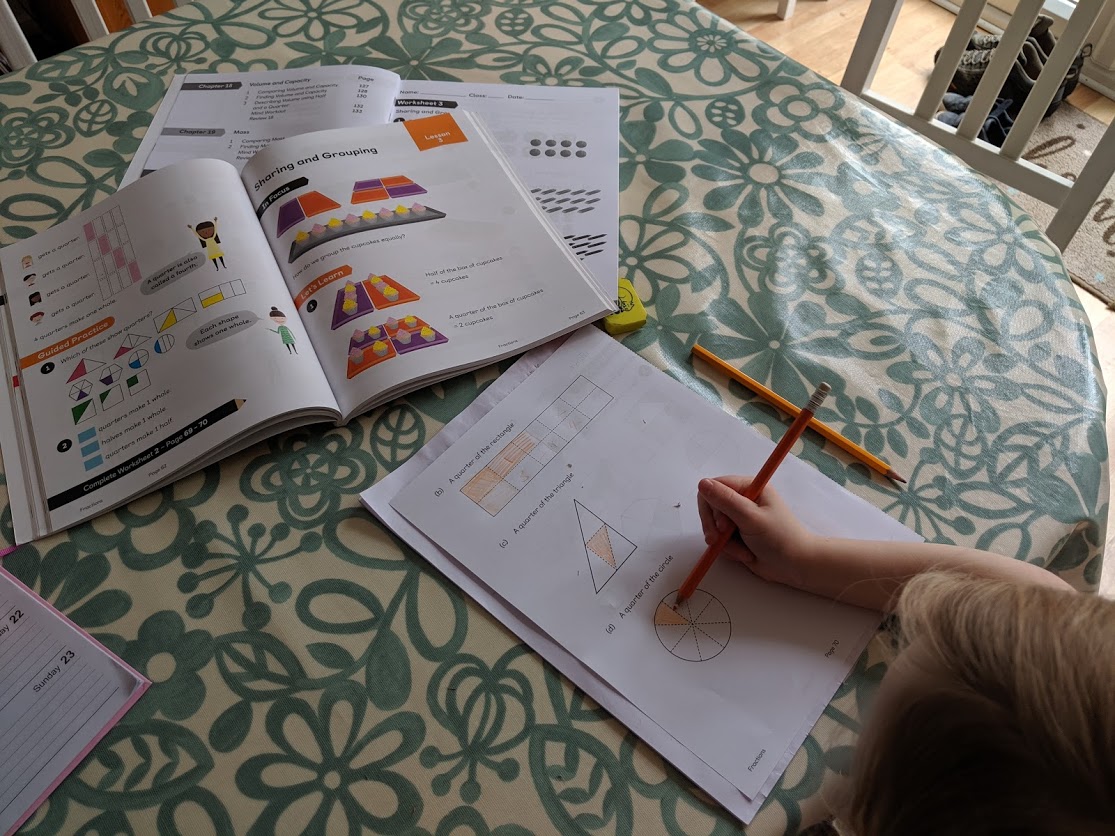
The Maths No Problem workbooks
The workbooks are printed in black and white and have perforated pages, so it’s easy to pull them out for the child to work on. We tend to do one lesson then the correlating worksheet. I keep track of any areas that the children seem to be struggling on, to make sure we cover it again in the not too distant future. The workbooks are well set out and clear with plenty of space for the children to write their answers
There are regular review pages built in the workbooks which are a really good way of seeing where any weaknesses might lie.
Are any other resources needed?
The simple answer is yes – but these are probably things that you would have anyway as a home educator. The main things that we use are linking cubes and a base ten set. You could use another sort of counter or manipulative set but these are relatively inexpensive and will be used by all three children, so works out affordable for us. There may well be additional resources that we buy as we progress through the books.
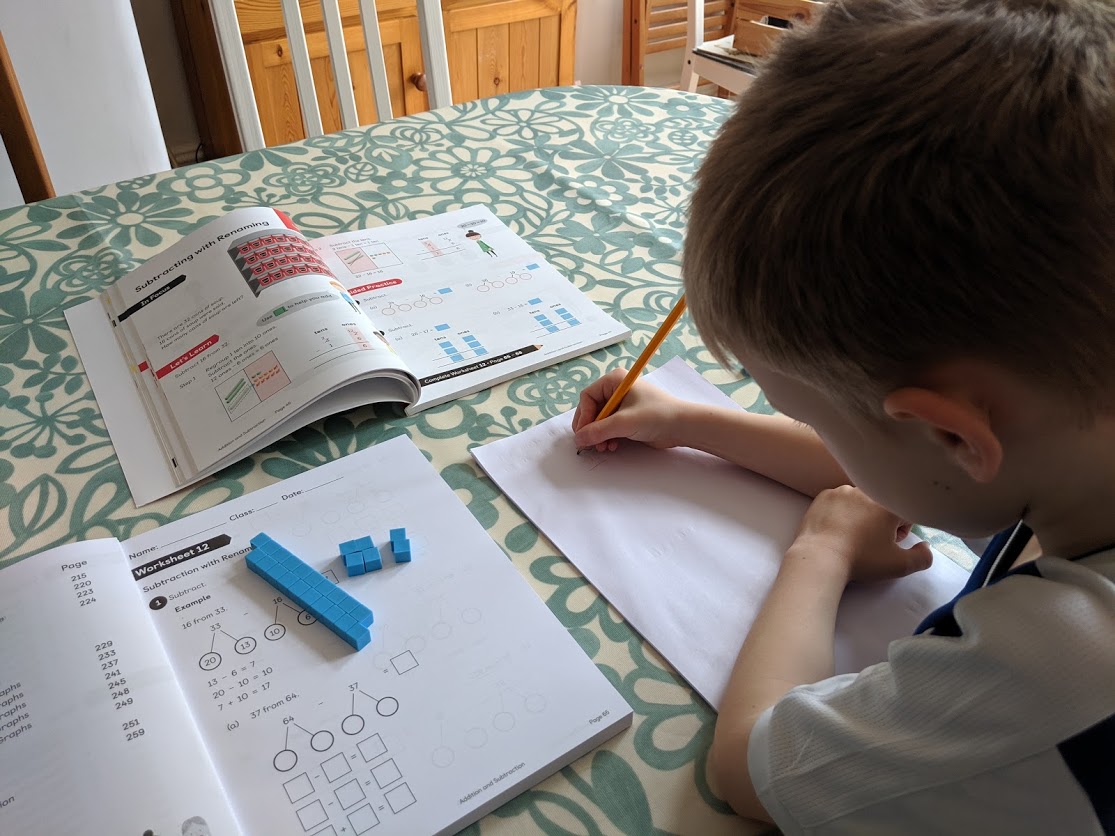
Do you supplement with other books?
Yes! It probably isn’t necessary, and if it was just Emma, then we would probably just supplement with worksheets from Twinkl. However, as I’ve written in the past, Daniel initially found maths a bit of a challenge so we stopped using Maths No Problem and switched to some other workbooks. Daniel really likes the Letts ones I wrote about here, and we also use ones from Schofield and Sims which he enjoys too.