
One of the things that I see rarely discussed in Home Ed circles, amongst all the sharing of free printable math worksheets, and reading tips is how people assess the progress of their home educated children. I suspect that, in the seemingly only accepted approach online, of unschooling and unstructured approaches, sticking your head above the parapet and admitting that you do assess your children’s progress can be quite difficult.
Personally, I think there are different ways to assess progress. Schools do it in a fairly clear and test centric way, which I understand as it’s about volume and getting through the numbers of children in a given amount of time. However, home educating parents have much more freedom in when they can assess children and the form that that assessment takes.

Formal Assessment
When people hear the term assessment, they often think of formal sit down tests. These do of course have their place but it’s not necessarily how I choose to asses my children. If formal tests are something that you would like to do, then Twinkl has a good range of tests that you can print and run with. For example, this pack of KS2 Maths Reasoning Tests. They are set out very test like which may or may not suit your home education setting, but they work through the various things that a child in that Key Stage would be expected to be able to do.
I have used these in a loose way with the children as part of their general maths work when I have wanted to check that they’re secure in a particular area of work, but I haven’t administered them under test conditions, instead presenting them as a lesson to supplement their usual maths work.

Ad-Hoc Assessment
A method that favours home educating parents is to assess progress on an ad-hoc basis. It’s easy to spot in your children when something has clicked, for example, it is easy to spot when reading leaps take place, as well as when something in their mathematical knowledge begins to make sense. Educating at home also means that you can see when children are applying knowledge learnt in the past – it’s these moments that can often really vindicate the decision to home educate, and no amount of formal tests will ever account for the application of knowledge in real-world situations.
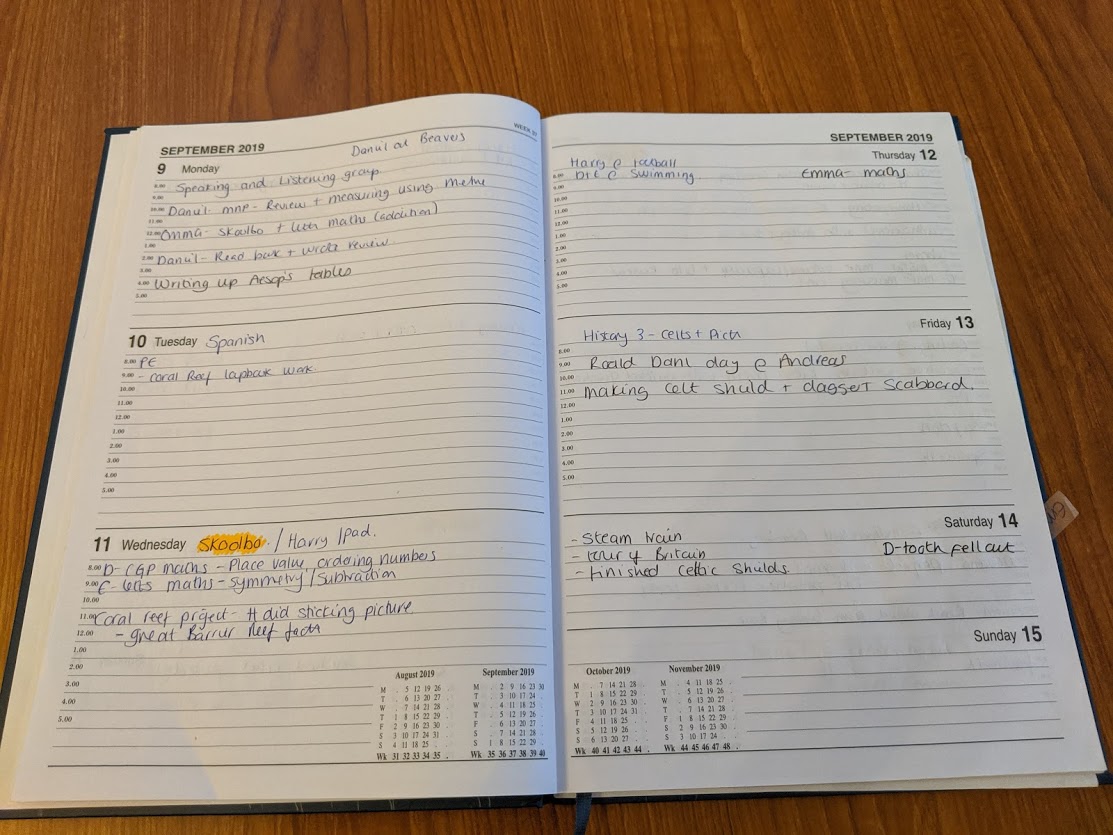
My assessment started out as very ad-hoc. I have an academic diary in which I write down each day the things we have done. This has always been very brief; a note to say that we have attended a group, that we have worked on a project or similar. I have often noted down when I have spotted the application of knowledge. I have done this since D’s reception year and the diaries are stored alongside their folders of work for that year.
Using the National Curriculum as a Benchmark
The National Curriculum is freely and readily available and this is the programme of study that is followed in state-maintained schools; Academy and Private schools do not have to follow this curriculum. Personally, there are elements of the National Curriculum that I like and other elements that I don’t. I don’t like the narrow focus of the history curriculum, for example, and I don’t like the way the history of the UK and its role in empire and how that affects our relationship with the world today is taught. I think we do our young people a disservice if we don’t teach them history in a clear way.
However, despite its flaws, the National Curriculum does provide a good structure in which you can assess your children against their (schooled) peers. I think most home educating families would be surprised to find that they’re probably, quite naturally, covering many of the elements of the curriculum anyway at home.
My Approach
My own approach has, I suppose been semi-structured. I have made use of the Core Knowledge books, and I refer to these for topic and project ideas when we hit a lull. I find they set out the information really well and we have completed a couple of projects based on the ideas suggested as core knowledge for Years 1 and 2. I’ve used them to check that we are more or less in line with expectations and they’ve been reassuring to me when I’ve felt things aren’t going as well as they could or should be.
As mentioned, I keep a daily diary where I note down the work the children have done and the groups we have been to, as well as noting any difficulties they’ve had – this is particularly useful as I’ve used this refine my approach to teaching certain mathematical ideas as well as using my notes to find additional supplementary work to help the children become secure in their knowledge.
All this has been quite ad-hoc but this year I am trialling a more formal and structured approach. Using the National Curriculum as a baseline I am going to be reviewing the older children against the expected requirements for Years 1 (both children) and Year 2 (for D). I’m not overly concerned about the details of what is being taught in some areas, but more I want to make sure that we are broadly in line with where their schooled peers would be.
I am using these ‘what your child should know’ guides for Science, English and Maths. I like these as they’re aimed at parents and have links to areas of work so I can instantly find things that will help me teach the children. I intend to assess them using these by the February half term, the again just after Easter and again at the start of summer. My plan is that any gaps can be addressed in the early autumn term.

I also have these posters printed and stored away for each child to look at the other areas of the curriculum. I know we are quite light on IT type stuff, and that’s an area or me to do some research on over the coming weeks about how we can redress that. I also plan to go through these by Easter time and identify any real gaps so we can tailor some projects towards them. The Year 1 guide is here and it’s easy to print and go through each subject area.
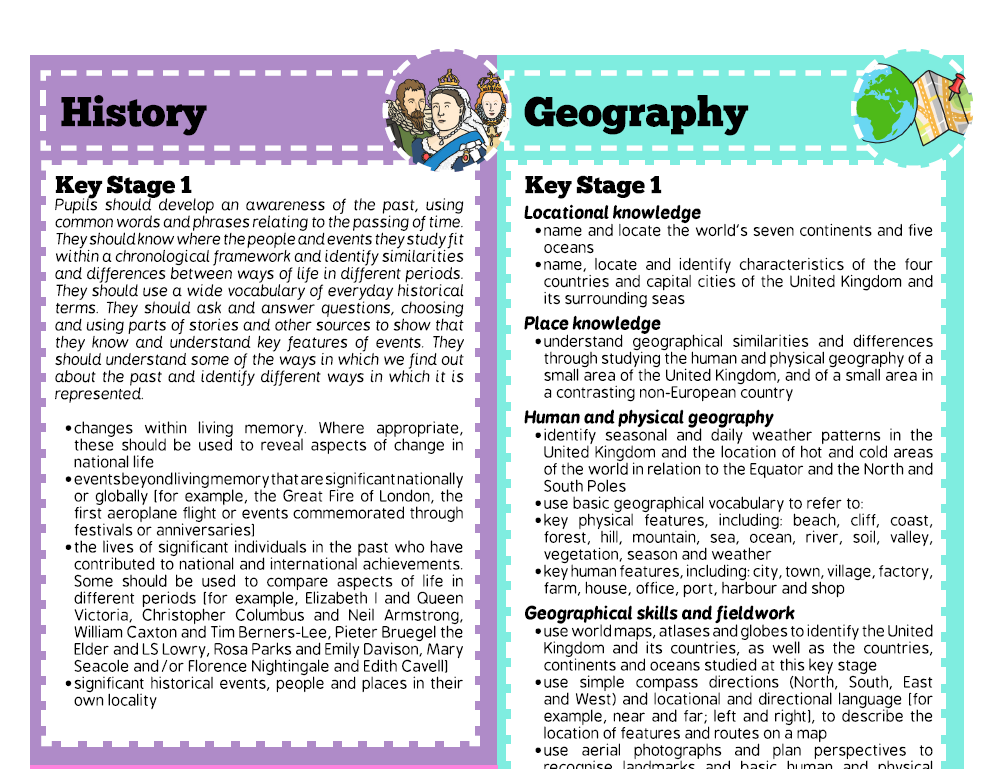
At the moment, the two older children have a folder each with these assessment documents in and I need to find some time to work through them and highlight any clear gaps.
I know that my approach to assessing the children’s progress won’t be for everyone, but I hope it works for us and I’ll be sure to provide an update later in the year about how we are getting on with this more formal approach and how it has impacted on our home education.






Great way to increase kids education. Set a clear and defined goal for them. I think boy’s school work is requiring them to use a computer at home more and more for their assignments.