
At the start of the year, I wrote about some of the things I wanted to cover with the children this year, and one of those things was to do more on art with the children. H, in particular, loves to draw and create and Em has a love of drawing too. One of the many benefits of Home Ed is that we can look at things that are outside of the national curriculum.
The first of these sessions took place in early January where we learnt all about the fascinating Yayoi Kusama, and the second session was to look at Andy Warhol and Pop Art.
Why Andy Warhol?
I wanted to look at artists who were producing the same sort of work, so the children can begin to compare and contrast. They should be able to spot the similarities in the artist’s work. We will next look at Roy Lichenstein and Keith Haring; both Pop Artists but producing their art differently. Andy Warhol is a name synonymous with Pop Art so it made sense to study him.
Materials Needed
For this session I provided each child with a range of printouts should they wish to make their own pack of information.
- Famous Artist Research Brochure (from TpT)
- Famous Artist Colouring Pages (from TpT)
- Famous Artist Paper Dolls (From TpT)
- World Map
- Flag of America and Map.
Parents were also asked to printout a number of black and white images of their children for the activity.

How I ran the Session
First of all, we recapped a little about Yayoi Kusama and her work and how some of it was considered Pop Art and we talked about what Pop Art was. It was important to place this with a time period of post-war America and the beginning rise of consumerism.
I told the children I’d been working hard on some art and showed them a jar of jam and a bottle of Vimto. We discussed whether this was art or not, and we talked about Warhol’s famous soup can images and how he took the ordinary and made it into art.
I covered a little about Andy Warhol and shared a few short YouTube videos of interviews with him. The three I used are below:
I asked the children what sort of person they thought Andy Warhol was and they thought he was awkward and eccentric!
We then talked about the 1950’s and how this was a Post-war period. We talked about the rise in freedoms and the spending that would have been taking place and the idea of brands and consumerism and the significant social changes that were taking place at this time. We then looked at some of his art work including the famous soup cans, the Coca Cola bottles and the famous Marilyn Diptych.
Pop-Art Activity
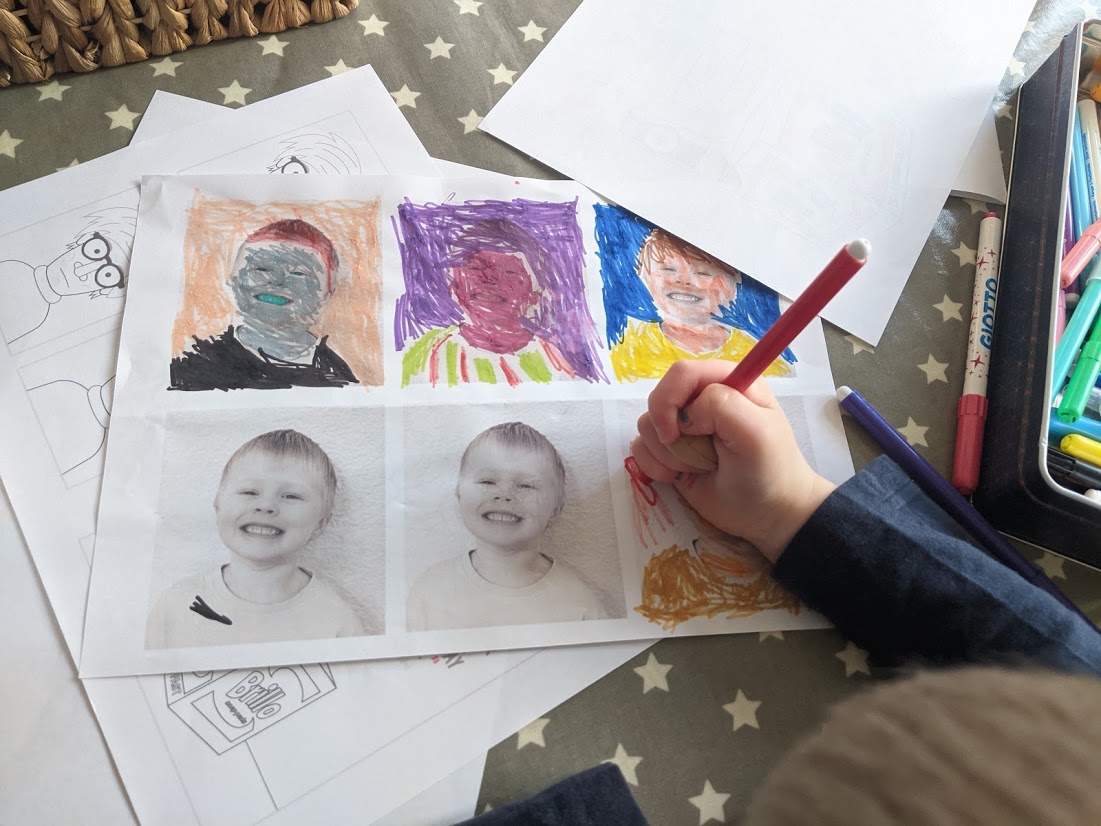
I then invited the children to use their black and white photo’s to ‘pop art’ themselves, taking the Marilyn Monroe Pop Art images as inspiration, The effect was really good and the pictures looked great as they finished them! It’s a simple but effective way to demonstrate Pop Art. I plan to run this again in the future when we can meet face to face and I hope to be able to do some silk screen printing with the children to show the method that Andy Warhol used.
Follow up with my own children
With my own children, we have followed this up by adding to our artist project book. I found some comprehension work for the older two and we looked at some more of Andy Warhol’s work together. We also included this fact sheet in our study books.
Our next artist is Roy Lichenstein and I looked forward to sharing our work on him!

Other artist studies can be found below.



Fantastic I love the idea of using pop art and their own photos. It looks fab.
That looks an exceptional bit of work – I alos love the idea of using the childrens own pictures