
I thought I’d share some different approaches that home educators might take when covering history in their day to day.
My personal approach is to do project-based studies. I have, so far, tended to try and stick to the big topics that are covered in popular books and school (eg Romans, Egyptians etc). I have covered these as they’re important to learn about but also because they’re interesting and engaging for the children. I’ll share below some different approaches that work for different types of home educators.
Timeline History
When we first started home educating a really popular approach that I saw come up time and time again was Story of The World. This is a US based resource and it tells history as a timeline starting with the Ancient Sumerians and moving into the present day. There are, I think, four volumes, and each volume consists of a written book which you read chapter by chapter and a large teacher guide and activity book. I did try Story of the World and it just didn’t work for us. I like the idea but it just wasn’t the right resource for us.
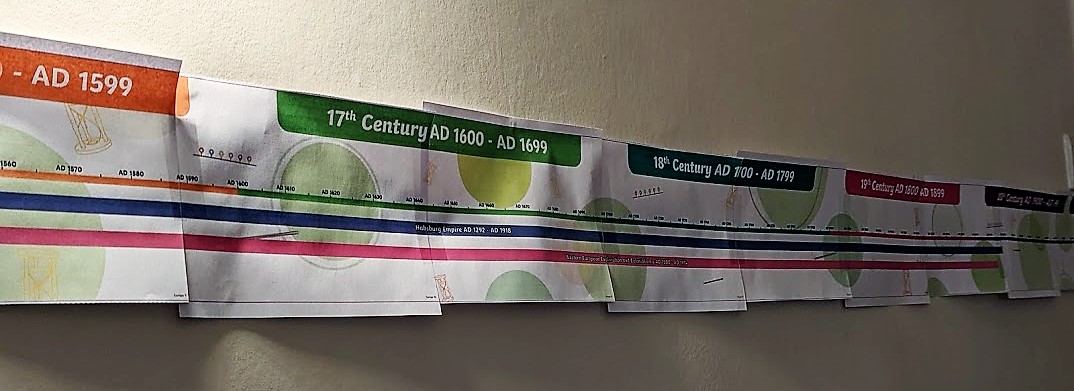
Happily, Twinkl, a UK-based educational supplier, has released its Timelines Of World History resource. This is aimed specifically at Home Educators and includes a detailed timeline for all the continents as well as fact cards about key moments in history. I have printed the European one to use (as we are doing British History at the moment) and it’s been useful as a tool to demonstrate to the children what else was happening in Europe at that time. As it’s a Twinkl resource you’ll be able to find other resources to sit alongside this to support learning.
The benefit of using a linear timeline-based approach is that you can learn about the history of the world in order – and cross reference what was happening at the same time in other parts of the world. Having a physical timeline can help children get a better idea of how long ago each stage was.
Project Based Learning
This is the approach that we follow. The children either suggest a topic they’d like to learn about or I choose it based on any trips we have planned or similar. We are currently studying the Tudors to tie into a recent trip we went on. Here I make use of Twinkl in a big way to cover some of the bits sections but also supplement with books and items from other places. We are currently following the Tudor history from the War of the Roses up to Queen Elizabeth I. This timeline, as well as this family tree, are excellent to help us move along each stage of the history in order. I’m using BBC Teach as well as some Twinkl resources for this work.
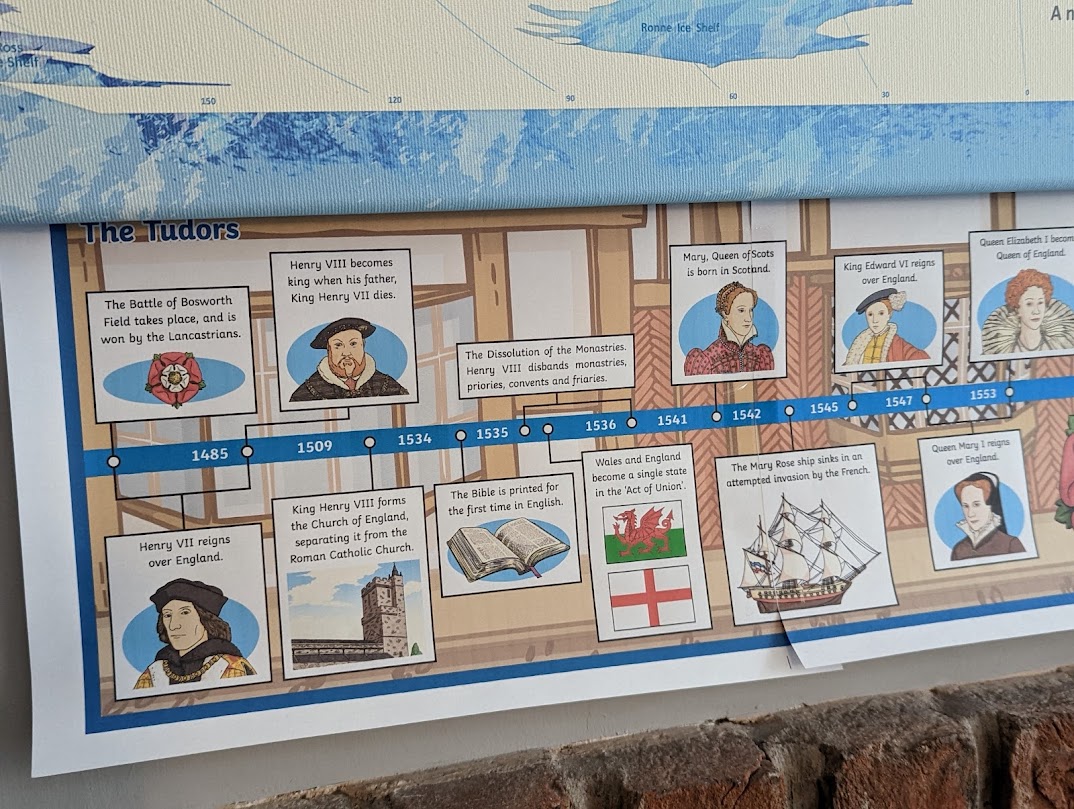
Project based learning works well for us as I can tailor the work to all three children and offer stretch and challenges to them in different ways. It works really well for us and is the approach we will stick to for the next year or two at least.
National Curriculum History
Some families prefer to follow the national curriculum history topics. Now I personally think the history part of the national curriculum is quite loose and you don’t really need to do a great deal to satisfy that part of the National Curriculum and that’s why I don’t really consider the national curriculum when I’m planning our history projects. That said, if you use the Twinkl PlanIt section then you can see their suggested history topics for each year group as well as the suggested approach to each lesson. This way you are most probably covering the key periods that would be covered in school and everything you need is one easy place for you.
What approach do you follow with history at home? Do you follow one of the above or perhaps a mixed approach?




Interesting as ever