Ad – Gifted item
I suspect I’ve mentioned before that of all the Home Education things I do, I find the teaching of English really difficult.
I was always confident that I’d get the children reading and that they would do so well (and that they’d develop a love of reading) and I am confident with the maths programme that we use, as well as our approaches in the other subjects. But English I often find myself feeling conflicted.
I don’t wholly agree with the approach used in schools and, because of that, I tend to find the resources available aren’t particularly as I’d like to use. I have recently bought some books that act as a textbook through the National Curriculum and I intend to spend some time writing my own scheme for the children to commence in September (or earlier if things work out that way).
But, there are some other things that you can do to encourage English, and one of those is creative writing. I have written in the past about using poetry as a means to experiment with language, and we should look to pick this up again soon. But alongside that we have also been looking at Story Starters. We were sent two books to take a look at (and this post is marked as an advert in line with my disclosure policy).
What are Story Starters?
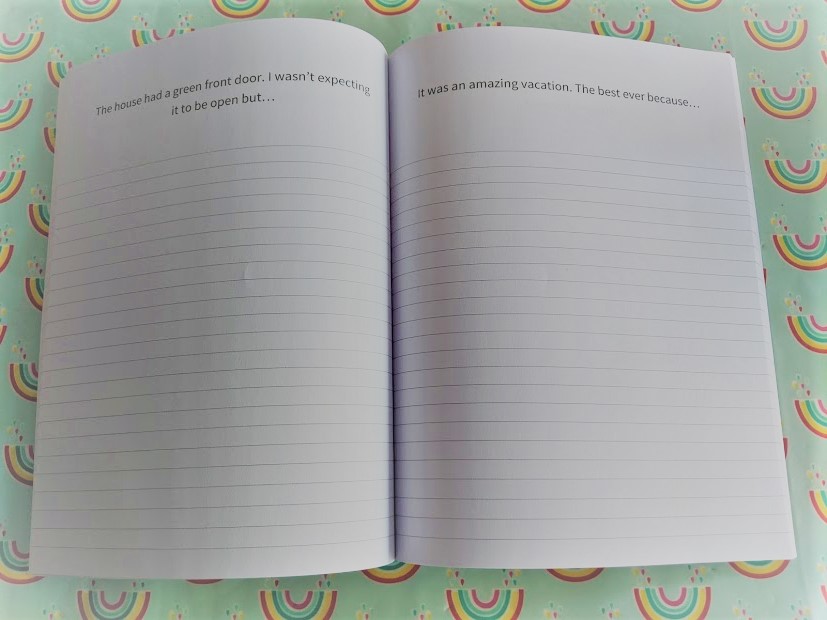
The books that we were sent are Story Starters for Little Kids (KS1) and 101 Story Starters (KS2). These both retail at £7.99 which I think is probably a fair price. They’re A4 sized with a range of interesting prompts for creative writing.
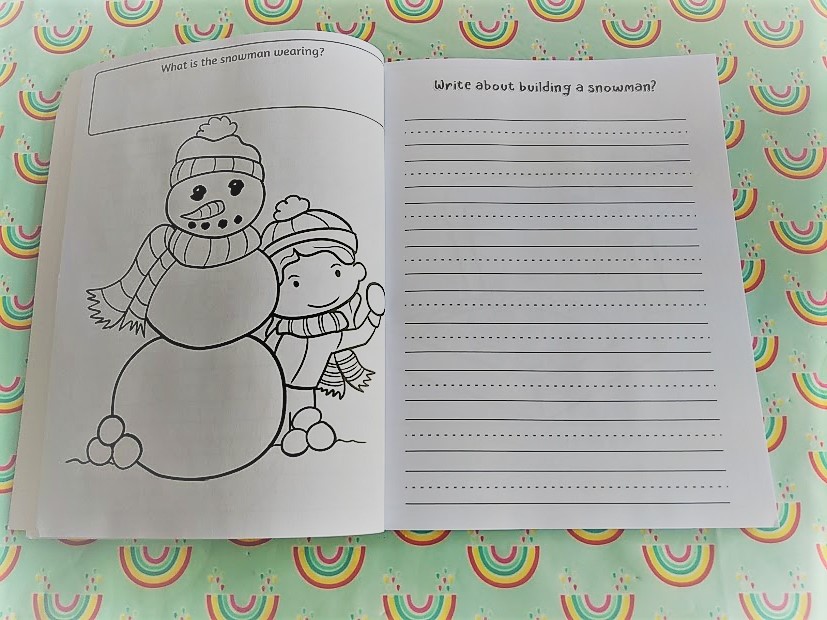
The Story Starters for Little Kids has 50 different double-page spreads. One side has a picture complete with questions to prompt the children to think about it and the other side has a story starter at the top complete with lines to write on. The 101 Story Starters is aimed as KS2 and each A4 page has a story starter prompt, there are no pictures in this one.
What I thought of the Story Starters
When this first arrived I popped them on the shelf with a view to taking a proper look and working through them with the children. However, current routines are out of the window a little so I got them down one afternoon when we needed to fill a bit of time. Verbally, the children had a great grasp of the English language and use a wonderful range of words and expressions. Getting them to write it down can often be a lot harder.
We opened the book at a random page (we used the KS1 one first) and we talked about the picture, getting the children to think about what they could see. The first one was a girl in a rowing boat. We each wrote a story and it was interesting to see how different they were! My story was the girl rowing down the canal, Em did a story about a girl rowing out to rescue a duck and D’s story involved ending up on the moon!
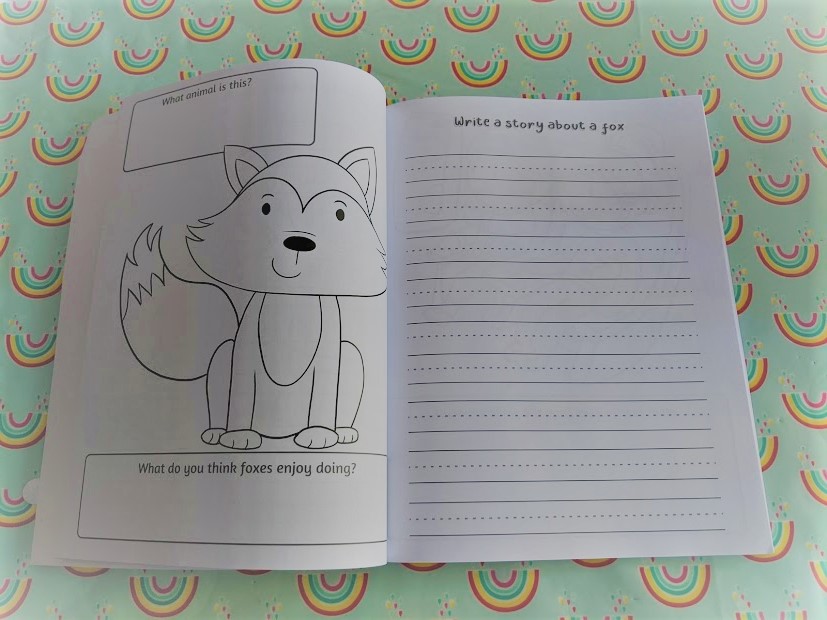
Since then, D has, independently, been writing these stories out This is a really significant step for us as he has been so reluctant in the past to do any creative writing. I do have to encourage him to think about using expressive language at times, but anything that gets him excited and engaged is perfect, the rest will come in time.
How we will use story starters
I think, for the time being, the story starters will sit with our activity books, rather than our learning books. The children have been dipping in and out of the books on their own and I want to keep it fun and light for them. I’ve been so impressed with them that I have ordered a second book so the older ones have one each to work from. I’m going to be doing some work on planing an English curriculum for the three of them and in there will be plenty of things about exploring our written work, so it might be that we go back to some of their early stories and expand them to give them more depth and to develop them a little, so they too can see how they’re growing in their use of written English.